
A sharp twinge low in the back of your leg during a run or a game can be hard to place. Is it the tendon or the muscle? Telling achilles tendinopathy vs calf strain apart matters, because these two injuries sit close together, feel similar in the first few hours, and call for different rehabilitation. This guide walks through how each one tends to behave, the signs that point one way or the other, and when a check with a physiotherapist is a sensible next step.
Neither problem is one to guess at for long. A calf tear that is pushed too hard can linger, and achilles tendon pain that is left alone can settle into a longer-term pattern. Reading your symptoms early gives you a clearer starting point.
What sets achilles tendinopathy vs calf strain apart
The achilles is the thick tendon that connects your calf muscles to your heel bone. A calf strain, by contrast, is a tear within the muscle belly higher up the leg. Because they form one connected unit, load travels through both when you walk, run or push off, which is part of why the two get mixed up. The core difference in achilles tendinopathy vs calf strain comes down to which tissue is overloaded and how the pain started. Tendinopathy usually builds gradually, while a muscle strain often arrives in a single moment.
Recognising achilles tendon pain
Mid-portion achilles tendinopathy is the most common form, felt a few centimetres above the heel where the tendon is thickest. Achilles tendon pain of this kind tends to creep in over weeks rather than striking all at once. Many people notice stiffness and soreness first thing in the morning, or when they stand up after sitting, that eases as the tendon warms up and then returns after activity.
The tendon may feel tender to squeeze, and a small thickened area is sometimes present. Pain that worsens with hopping, stairs or hill running is a familiar pattern. These features lean towards the tendon rather than the muscle, though a physiotherapy assessment is the way to build a clearer picture.
Common calf strain symptoms
Calf strain symptoms usually begin with a sudden, sharp pain in the muscle, often described as being struck or kicked in the back of the leg. A gastrocnemius strain affects the larger, more superficial calf muscle and tends to happen during quick acceleration, jumping or a sharp change of direction. A soleus strain sits deeper and lower, and more often shows up during longer, steady efforts or endurance running.
A muscle strain tends to announce itself in ways you can usually pin down:
Sudden pain in the muscle during effort, sometimes with a snapping or tearing sensation, is common with a tear.
Tenderness, tightness or a firm knot part-way up the calf can develop in the hours afterwards.
Bruising or swelling may appear over the following day or two as the muscle fibres begin to heal.
Pain when you rise onto your toes, along with a limp for the first few days, often accompanies a strain.
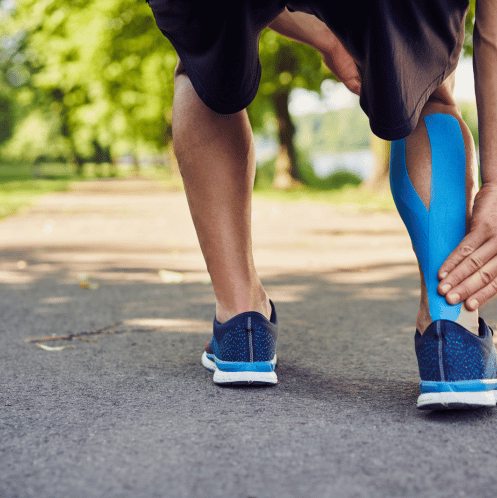
Calf tear vs achilles: how to tell the difference
Sorting a calf tear vs achilles problem often comes down to three questions: how the pain began, where it sits, and how it behaves. A tendon issue tends to build slowly and sit low, near the heel, with morning stiffness. A muscle strain tends to arrive fast and sit higher in the fleshy part of the calf, with immediate pain. Thinking through achilles vs calf injury along these lines gives you a useful first read, though overlap between the two is real and not every case is clear-cut.
Why runners see both injuries
A calf injury in runners often traces back to a spike in training load, a jump in hill work, new footwear or tired muscles late in a session. The calf and achilles absorb large forces with every stride, so sudden changes give them little time to adapt. Both a muscle strain and a tendon problem fall under the broader umbrella of sports injury, and calf tears in particular belong among the muscle strains that physiotherapists see regularly.
When to see a physiotherapist
Mild soreness that settles within a few days with relative rest may not need much beyond sensible loading. Pain that keeps returning, limits your walking or training, or has not eased after a week or two is worth having assessed. A physiotherapist can examine the area, ask how the injury happened, and guide graded physiotherapy exercises suited to the tissue involved. Individual responses to treatment vary, and not every presentation is suitable for physiotherapy management.
Some symptoms need urgent attention rather than watchful waiting. Sudden severe calf pain with swelling, warmth or redness can be a sign of a blood clot. A loud snap at the back of the ankle, a gap you can feel in the tendon, or an inability to push off through the foot can point to a ruptured achilles. In these situations, seek prompt medical care rather than waiting for an appointment.
Achilles and calf physio across Adelaide
Ducker Physio offers achilles physio in Adelaide through clinics in the eastern and northern suburbs, with sports physiotherapy in Adelaide tailored to runners and active people. If you are looking for calf strain physio in Magill or sports physio in Salisbury, our physiotherapists can assess the injury and design a loading program suited to your goals. No GP referral is needed, initial 20-minute assessments are available, and same-day appointments are offered at times.
To book an assessment, make a booking or call the clinic that suits you. Ducker Physio Magill is at 465/467 The Parade, Magill SA 5072, on 08 7092 5962. Ducker Physio Salisbury is at 9 Mary Street, Salisbury SA 5108, on 08 7092 5964.
Frequently Asked Questions
How do I know if it's my achilles or calf?
The starting point is how the pain began and where it sits. A problem that built gradually, sits low near the heel and feels stiff in the morning leans towards the tendon. A pain that struck suddenly and sits higher in the muscle leans towards a strain. The two can overlap, so a hands-on assessment gives the most reliable answer.
Achilles tendinopathy recovery time: how long does it take?
Recovery varies widely from person to person and depends on how long symptoms have been present, your training load, and how the tendon responds to graded exercise. For some people, meaningful change takes several weeks to a few months of consistent rehabilitation. A physiotherapist can help set expectations based on your individual presentation.
Calf strain recovery time: how long does it take?
A minor muscle strain may settle over one to three weeks for some people, while a more substantial tear can take considerably longer. Returning to sport too soon raises the chance of re-injury, so a graded return guided by your symptoms is usually the sensible path. Individual timeframes differ.
Can a physio diagnose achilles tendinopathy?
A physiotherapist can assess your symptoms, examine the tendon and how it responds to load, and form a clinical picture that guides management. In some cases imaging or a medical review is recommended to help rule out other causes. Physiotherapy is not suitable for every presentation, and referral is arranged when appropriate.
Can I keep running with a calf or achilles injury?
Sometimes a modified level of activity is reasonable, and sometimes a period of rest from running is needed. The answer depends on the tissue involved, your pain levels and how the injury behaves under load. Pushing through sharp or worsening pain tends to slow progress, so individual guidance helps.
General information only. Individual symptoms and appropriate treatment vary. Sudden severe calf pain with swelling, warmth or redness, a feeling of a snap at the back of the ankle, or an inability to bear weight or push off through the foot can signal a serious problem such as a blood clot or a ruptured tendon, and needs urgent medical assessment.